For most tourists, the choice is simple. Pick the Seoul Climate Card for a Seoul-only trip with many subway and bus rides each day. Choose the Tmoney Travel Card for a more flexible trip that includes other cities, taxis, airport buses, or small everyday payments. In short, one card focuses on unlimited rides in Seoul, while the other focuses on wider use across Korea.
1. What Is the Seoul Climate Card?
Seoul describes the Climate Card as a transit pass for its public transportation network. Short-term passes come in five options: 1 day for KRW 5,000, 2 days for KRW 8,000, 3 days for KRW 10,000, 5 days for KRW 15,000, and 7 days for KRW 20,000. On top of that, travelers need to buy the physical card separately for KRW 3,000. For short-term passes, the valid period starts on the day the card is charged, and users cannot load those passes in advance.
official Seoul Climate Card guide
Just as importantly, coverage has limits. The card includes Seoul-based subway lines, some connected sections outside Seoul, and Seoul-licensed city and town buses. However, Seoul excludes the Shinbundang Line, intercity buses, airport buses, and non-Seoul-licensed buses. On the subway, extra fare may apply if you get off outside the service range.
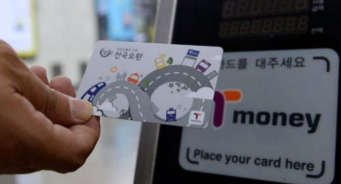
2. What Is the Tmoney Travel Card?
Unlike the Climate Card, the TMONEY TRAVEL CARD works as a reloadable pay-as-you-go card. Tmoney says tourists can use it on buses, subways, taxis, airport buses, and express buses anywhere in Korea. The same page also says the card can be used for easy payments at convenience stores, cafes, and other Tmoney locations.
That wider reach makes a big difference. A traveler might land at Incheon, take an airport bus, ride the subway in Seoul, use a taxi late at night, and then head to another city later. For that kind of trip, the Tmoney Travel Card fits more naturally. Tmoney lists the card price as KRW 4,000 and says it is sold at convenience stores and the bus ticket office in Incheon Airport.
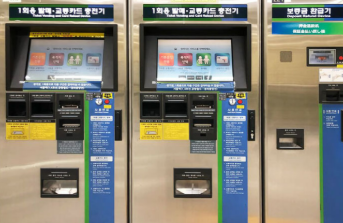
3. The Real Difference: Value vs Flexibility
When travelers compare these cards, the core question is not price alone. Instead, the real question is how they plan to move around Korea. A Seoul-heavy itinerary favors the Climate Card because the pass removes the need to think about each fare inside the covered area. That setup can feel easier for first-time visitors who expect to ride often in one city. This conclusion is an inference based on Seoul’s fixed short-term pricing and unlimited-use structure.
By contrast, the Tmoney Travel Card gives up the unlimited-ride feature but adds freedom. Travelers can use it in more places and on more types of transportation. As a result, it suits people who do not want to check route boundaries or excluded lines before every ride. That comparison is a practical inference from the official product descriptions.
4. When the Climate Card Makes More Sense
A busy Seoul schedule is where the Climate Card shines. Imagine a day that starts in Myeong-dong, continues to Gyeongbokgung, moves on to Seongsu, and ends in Hongdae. With that kind of plan, unlimited rides can feel convenient and stress-free. Seoul’s official guide also notes that, starting March 17, 2026, travelers can buy and recharge Climate Cards with international credit and debit cards, and short-term passes can be purchased with international credit cards. That change makes the card easier for foreign visitors to use than before.
For that reason, the Climate Card often works best for tourists who sleep in Seoul every night and expect heavy transit use during the day. Travelers in that group usually care more about easy daily value than about nationwide flexibility.
5. When the Tmoney Travel Card Makes More Sense
Broader travel plans point in the other direction. A tourist who expects to mix Seoul with Suwon, Busan, or other cities will usually benefit more from the Tmoney Travel Card. The same goes for travelers who plan to use taxis, airport buses, or express buses during the trip. Tmoney highlights all of those transport types as key features of the card.
Another advantage is simplicity across the whole trip. Instead of checking whether a station sits inside the Climate Card service range, users can top up the Tmoney Travel Card and keep going where Tmoney is accepted. Therefore, it is often the safer choice for people whose itinerary may change after arrival. That recommendation is an inference from the official coverage list and merchant-use description.
6. Important Limits Tourists Should Know
Many visitors assume the Climate Card covers all transport in and around Seoul. In reality, the official guides say otherwise. Short-term passes cover subway and bus, but they do not include Ttareungi or the Hangang Bus. The foreigner guide also notes that using Seoul Bike requires a Korean authentication method such as I-PIN. Because of that, most short-term visitors should think of the Climate Card mainly as a subway-and-bus pass.
One more update matters on the Tmoney side. Tmoney says sales of the KOREA TOUR CARD have ended, although existing cardholders can still receive the same partner benefits as the TMONEY TRAVEL CARD. So, in 2026, the better comparison is Climate Card vs TMONEY TRAVEL CARD, not Climate Card vs Korea Tour Card.
7. Final Verdict
Here is the clearest answer. Choose the Seoul Climate Card if your trip stays mostly inside Seoul and you expect to ride the subway and buses many times each day. Go with the Tmoney Travel Card if you want nationwide coverage, more transport options, and more freedom during the trip. Based on the official rules, the Climate Card wins for Seoul-focused value, while the Tmoney Travel Card wins for overall flexibility.
FAQ
Is the Seoul Climate Card worth it for tourists?
Yes, it can be worth it for travelers who stay in Seoul and use public transportation often. Fixed short-term pricing and unlimited rides inside the covered area create the main value. That conclusion is an inference from Seoul’s official pass structure.
Can I use the Climate Card on airport buses?
No. Seoul’s official service range excludes airport buses.
Can I use the Tmoney Travel Card outside Seoul?
Yes. Tmoney says the card works on public transportation across Korea, including buses, subways, taxis, airport buses, and express buses.
Is the Korea Tour Card still sold?
No. Tmoney says sales of the KOREA TOUR CARD have ended.