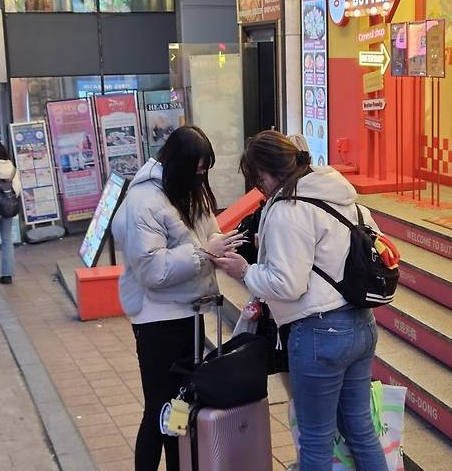
Korean addresses look simple until you actually need one.
You book a hotel. You order food. You try to find an Airbnb. You take a taxi. You search a restaurant. The map says you arrived, but the entrance is not there. The building has three doors. The café is on B1. The clinic is on the 5th floor. The old address and new address look completely different.
This is when many travelers realize they do not understand how Korean addresses work.
Korea uses a road-name address system, and the official English Road Name Address website is operated by the Ministry of the Interior and Safety. You can search Korean addresses in English through the official road-name address site.
official Korean Road Name Address searchhttps://eng.juso.go.kr/openEngPage.do
However, travelers may still see older lot-number addresses, Korean-only building names, floor numbers, underground levels, and confusing map pins. This Korean address guide explains how to read Korean addresses, what details actually matter, and how to avoid going to the wrong door.
In Short
Korean addresses usually go from large area to small area in Korean order: city or province, district, road name, building number, and then detailed unit information. For example, Seoul comes before the district, and the street/building information comes later.
The current road-name address system uses street names and building numbers. Older lot-number addresses may still appear in some places, so travelers often see two different-looking addresses for the same building. Korea’s old land-lot based address system was replaced by the road-name system, and the older system was officially decommissioned at the end of 2013.
The biggest mistake is trusting only the map pin. Always check the building name, floor, room number, entrance, and Korean address if you are going to a hotel, clinic, restaurant, Airbnb, or pickup point.
1. Why Korean Addresses Confuse Foreigners
Korean addresses confuse travelers for three main reasons.
First, Korean addresses are written in a different order from many Western addresses. They usually start with the bigger area and move toward the smaller place.
Second, Korea has both newer road-name addresses and older lot-number style addresses. Even if the road-name address is the official system, older addresses can still appear on maps, receipts, restaurant pages, and business listings.
Third, many Korean businesses are inside multi-floor buildings. A restaurant, café, clinic, salon, or store may not be on the ground floor. The map may take you to the building, but not directly to the business entrance.
Here is the real problem:
| What Tourists Think | What Actually Happens |
|---|---|
| The map pin means the entrance | The entrance may be around the corner |
| The address means street level | The business may be on B1 or 6F |
| One building means one business | One building may have 20 businesses |
| English address is enough | Korean address may work better in local apps |
| Old and new addresses are different places | They may be the same location |
So the goal is not just to “read an address.” The goal is to find the correct door.
2. Basic Korean Address Order
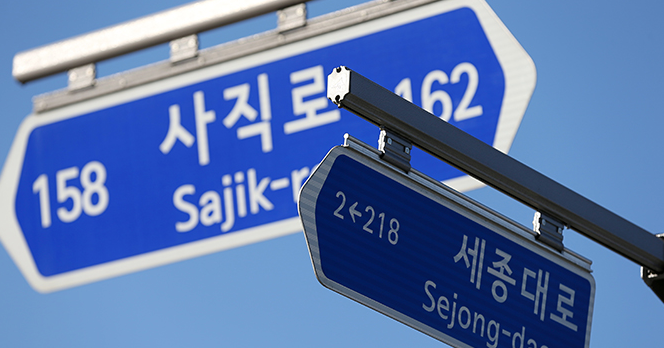
A Korean address usually moves from big to small.
A simple structure looks like this:
| Korean Address Part | Meaning |
|---|---|
| 서울특별시 | Seoul Special City |
| 종로구 | Jongno District |
| 사직로3길 | Road name |
| 23 | Building number |
| 102동 304호 | Building 102, Unit 304 |
In Korean style, the address often starts with the city or province. Then it narrows down to the district, road, building number, and detailed unit.
A sample official-style English road-name address can look like this:
42 Doum 6-ro, Sejong-si, 30112, Republic of Korea
The official Road Name Address English site shows this type of format on its homepage example.
For tourists, the most important parts are usually:
| Part | Why It Matters |
|---|---|
| City | Seoul, Busan, Incheon, etc. |
| District | Helps avoid same-name roads in different areas |
| Road name | Main address search term |
| Building number | Helps identify the exact building |
| Floor | Needed for restaurants, clinics, cafés, salons |
| Room/unit number | Needed for hotels, offices, apartments, Airbnb |
If you only copy the road name and ignore the building number or floor, you may still get lost.
3. Road-Name Address vs Old Lot-Number Address
This is one of the most important things to understand.
Korea’s road-name address is the newer official style. It uses a road name and building number. The older lot-number address is based on land lots and neighborhoods.
| Address Type | What It Uses | Example Style |
|---|---|---|
| Road-name address | Road name + building number | 테헤란로 152 |
| Old lot-number address | Neighborhood + land lot number | 역삼동 737 |
| Detailed unit | Building, floor, room | 5층, 501호 |
Travelers may see both. For example, a restaurant page might show the road-name address first and the old lot-number address in parentheses. This does not always mean there are two locations. It may simply be two address systems for the same place.
This is why copying only half an address can be risky.
If you are using Naver Map or KakaoMap, copy the full Korean address when possible. Korean address text often works better than English translation.
4. Korean Road Name Endings: Daero, Ro, and Gil
Many Korean road names end with -daero, -ro, or -gil.
These endings are useful because they tell you the type of road.
| Korean Ending | Romanized | Meaning |
|---|---|---|
| 대로 | daero | Large road or boulevard |
| 로 | ro | Road or street |
| 길 | gil | Smaller street or alley |
For example:
| Korean | Romanized |
|---|---|
| 세종대로 | Sejong-daero |
| 테헤란로 | Teheran-ro |
| 사직로3길 | Sajik-ro 3-gil |
| 홍익로 | Hongik-ro |
A useful detail: Korean streets commonly end in -daero, -ro, or -gil, and these categories are related to road size.
For travelers, gil is especially important. If you see “3-gil,” “5-gil,” or “12-gil,” you may be looking for a smaller side street or alley. Many trendy cafés, guesthouses, restaurants, and small shops are on gil streets.
5. Floor Numbers: 1F, 2F, B1, and Rooftop Confusion
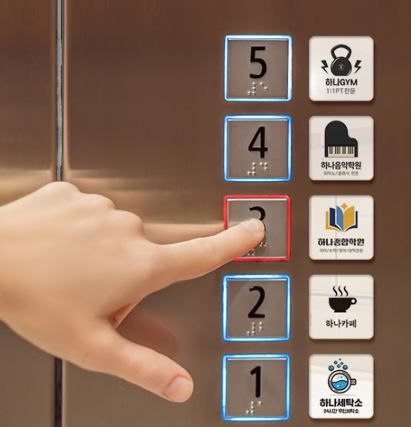
In Korea, many businesses are not on the first floor.
A map pin may take you to the correct building, but the actual place might be:
| Sign | Meaning |
|---|---|
| 1F | First floor |
| 2F | Second floor |
| 5F | Fifth floor |
| B1 | Basement level 1 |
| B2 | Basement level 2 |
| RF | Rooftop |
| 지하 1층 | Basement level 1 |
| 3층 | Third floor |
This matters a lot in Seoul. Many cafés, bars, restaurants, clinics, beauty salons, photo studios, and small stores are inside vertical buildings.
For example, a restaurant address may say:
서울특별시 마포구 와우산로 29길 12, 3층
That means the restaurant is on the third floor. If you only look at street level, you may think the restaurant is missing.
Before giving up, check:
- Building directory near the entrance
- Elevator sign
- Staircase sign
- Floor number in the address
- Business name in Korean
- Naver Map or KakaoMap listing details
Many “wrong map pin” problems are actually floor problems.
6. Room Numbers, Apartments, and Airbnb Addresses
Korean room and unit numbers can also confuse visitors.
Useful Korean words:
| Korean | Meaning |
|---|---|
| 동 | Building block |
| 호 | Unit or room number |
| 층 | Floor |
| 건물 | Building |
| 입구 | Entrance |
| 정문 | Main entrance |
| 후문 | Back gate |
| 지하 | Basement |
| 옥상 | Rooftop |
For apartments, you may see something like:
101동 1203호
This means:
| Part | Meaning |
|---|---|
| 101동 | Building 101 |
| 1203호 | Unit 1203 |
For hotels or offices, you may see:
5층 502호
This means:
| Part | Meaning |
|---|---|
| 5층 | 5th floor |
| 502호 | Room or unit 502 |
If you stay at an Airbnb or guesthouse, save the full Korean address, building name, entrance instructions, and host message. Do not rely only on the English address.
7. Why Map Pins Can Be Wrong in Korea
Map pins are useful, but they are not perfect.
A Korean map pin may take you to:
| Map Pin Problem | What It Means |
|---|---|
| Back side of the building | Entrance is on another street |
| Middle of a building block | Need to find the actual doorway |
| Underground mall area | Store may be below street level |
| Large apartment complex | Need building number |
| Department store | Need exact floor and zone |
| Traditional market | Stall may be inside an alley |
| University campus | Building name matters more than address |
This is common in areas like Myeongdong, Hongdae, Gangnam, Seongsu, Dongdaemun, COEX, and underground shopping areas.
If you cannot find the place, do not just walk in circles around the pin. Instead, check the Korean business name and floor number.
A good strategy:
- Copy the Korean name.
- Search it on Naver Map or KakaoMap.
- Check the building photo.
- Check the floor.
- Look for the Korean sign.
- Ask nearby staff if needed.
This is faster than staring at Google Maps while slowly losing your mind.
8. How to Search Korean Addresses Properly
Use Korean map apps when possible.
For Korea, these are usually more useful than only relying on Google Maps:
| Tool | Best Use |
|---|---|
| Naver Map | Local restaurants, cafés, buildings, reviews |
| KakaoMap | Directions, local businesses, public transport |
| Juso.go.kr | Official road-name address search |
| Papago | Translating signs and address text |
| Google Maps | General orientation and saved places |
The official Road Name Address English website can help you search road-name addresses in English.
However, for real travel navigation, Korean text is often more reliable. If a hotel gives you a Korean address, save it exactly as written.
Search example:
| Bad Search | Better Search |
|---|---|
| “Cute cafe Seoul” | Copy the Korean café name |
| “Hongdae guesthouse” | Copy full Korean address |
| English-translated road only | Korean road name + building number |
| Building name only | Building name + district |
| Restaurant name only | Restaurant name + neighborhood |
If there are several results with the same name, check the district carefully.
9. How to Tell a Taxi Driver an Address
Even if you use a taxi app, it helps to have the Korean address ready.
Do not try to pronounce a long Korean address from memory. Just show the address on your phone.
Best things to show:
- Korean address
- Korean business name
- Naver Map or KakaoMap result
- Phone number of the business
- Nearby landmark
- Hotel name in Korean
Useful sentence:
여기로 가 주세요.
“Please go here.”
Another useful sentence:
이 주소로 가 주세요.
“Please go to this address.”
If your destination is inside a large complex, tell or show the exact building name. For example, an apartment complex, hospital, university, convention center, mall, or department store may have multiple entrances.
10. Address Mistakes Tourists Make
Tourists usually make the same Korean address mistakes.
| Mistake | Why It Causes Problems |
|---|---|
| Using only English address | Korean apps may not read it well |
| Ignoring floor number | Business may be upstairs or underground |
| Ignoring building name | Large buildings have many businesses |
| Trusting only the pin | Entrance may be elsewhere |
| Confusing old and new address | They may look unrelated |
| Not saving Korean text | Hard to ask locals for help |
| Not checking district | Same road or business name may appear elsewhere |
| Forgetting room/unit number | Airbnb or office may be impossible to find |
| Searching only on Google Maps | Local data may be weaker |
The biggest mistake is thinking the address is finished once the map says “arrived.”
In Korea, “arrived” often means “you are near the building.” You still need to find the correct entrance, floor, and unit.
11. Useful Korean Address Words
Save these words before your trip.
| Korean | Meaning |
|---|---|
| 주소 | Address |
| 도로명주소 | Road-name address |
| 지번주소 | Old lot-number address |
| 우편번호 | Postal code |
| 시 | City |
| 구 | District |
| 동 | Neighborhood or building block |
| 로 | Road |
| 길 | Street or alley |
| 번길 | Numbered side street |
| 건물명 | Building name |
| 층 | Floor |
| 호 | Unit or room |
| 지하 | Basement |
| 출구 | Exit |
| 입구 | Entrance |
The most useful words are 주소, 층, 호, 입구, and 출구.
If you know these, Korean addresses become much less scary.
12. Best Address Strategy for Travelers
Here is the safest system.
Before visiting any place, save:
| Save This | Why |
|---|---|
| Korean business name | Helps locals and taxi drivers |
| Full Korean address | Works better in Korean map apps |
| English address | Useful for your own understanding |
| Floor number | Prevents entrance confusion |
| Building name | Needed in busy areas |
| Phone number | Useful if lost |
| Screenshot | Helps when internet is weak |
| Nearby landmark | Helps if the entrance is hidden |
For hotels and Airbnb, also save:
- Check-in instructions
- Door password instructions
- Building entrance photo
- Host contact
- Nearest subway exit
- Korean address screenshot
This sounds excessive, but it can save you when your phone signal is weak, your map app fails, or your taxi driver asks for clarification.
13. My Honest Verdict: Korean Addresses Are Not Hard, But They Are Unforgiving
Korean addresses are not impossible. Once you understand the structure, they make sense.
The problem is that small missing details can ruin everything. A missing floor number, wrong entrance, old address, copied English translation, or incomplete Airbnb instruction can send you to the wrong place.
So do not treat Korean addresses like simple one-line directions.
Treat them like a full location code:
city + district + road + building number + building name + floor + unit + entrance
If you save all of that, Korea becomes much easier to navigate.
Your map pin may still betray you sometimes. But at least you will know what to check before blaming the city.
FAQ
Why do Korean addresses look backwards?
Korean addresses often go from larger areas to smaller areas, such as city, district, road, building number, and unit. This can feel reversed compared with many Western address formats.
What is the difference between road-name address and old address in Korea?
A road-name address uses a street name and building number. The older lot-number address uses neighborhood and land-lot numbers. Travelers may still see both for the same place.
What does “gil” mean in Korean addresses?
Gil usually means a smaller street or alley. Many cafés, restaurants, guesthouses, and small shops are located on gil streets.
What does B1 mean in Korea?
B1 means basement level 1. Many restaurants, cafés, bars, shops, and food courts in Korea are located underground.
What does 호 mean in a Korean address?
호 means room or unit number. For example, 304호 means Room or Unit 304.
Should I use Google Maps or Naver Map in Korea?
Google Maps can help with general orientation, but Naver Map and KakaoMap are usually better for local Korean addresses, businesses, floors, and transport details.
Pingback: Naver Guide for Tourists: Korea’s Google Is More Powerful Than You Think - Korean Culture Life