Getting sick in Korea can feel scary, especially if you do not speak Korean.
Maybe you have a fever. Maybe your stomach hurts after eating spicy food. Maybe your throat feels terrible. Maybe you need a skin clinic, dental clinic, eye clinic, or a prescription. You search “hospital near me,” but suddenly you see dozens of Korean names, departments, and clinics you do not understand.
This is where many tourists make a simple mistake: they go to the wrong place.
Korea has many different types of medical facilities. A small local clinic is not the same as a large university hospital. A pharmacy cannot always replace a doctor. An emergency room is not always the best choice for mild symptoms. Also, some hospitals have international healthcare centers for foreign patients, while small clinics may have little or no English support.
This Korea hospital guide explains how to choose the right medical place, what words to search, how prescriptions work, and what tourists should prepare before seeing a doctor.
1. In Short
If your condition is serious, go to an emergency room or call emergency medical help. For non-emergency symptoms, a local clinic is often faster, cheaper, and simpler than a large hospital.
For tourists, the most common medical options are:
| Situation | Best Place to Start |
|---|---|
| Mild cold, fever, stomach pain | Local internal medicine clinic |
| Skin rash, acne, allergy | Dermatology clinic |
| Tooth pain | Dental clinic |
| Eye infection or irritation | Eye clinic |
| Injury or joint pain | Orthopedic clinic |
| Women’s health issue | OB-GYN clinic |
| Serious pain or emergency | Emergency room |
| Need foreign-language support | International clinic or hospital center |
VisitKorea provides a list of major medical centers that can assist travelers in emergency situations, including hospitals with foreign-language support and operating-hour details.
2. Clinic vs Hospital in Korea
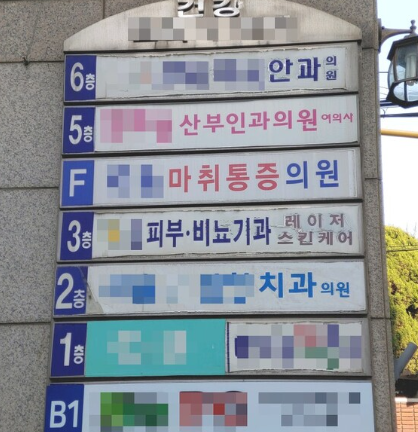
In Korea, many common medical problems are handled by small local clinics. These are often called 의원 in Korean.
A large hospital is usually called 병원 or 종합병원. A university hospital may be called 대학병원.
| Korean Word | Meaning | Best For |
|---|---|---|
| 의원 | Local clinic | Mild symptoms and basic treatment |
| 병원 | Hospital | More serious or specialized care |
| 종합병원 | General hospital | Multiple departments |
| 대학병원 | University hospital | Complex or serious cases |
| 응급실 | Emergency room | Urgent or severe symptoms |
| 약국 | Pharmacy | Medicine after prescription or OTC drugs |
For a mild cold, stomach issue, rash, or sore throat, a local clinic may be enough. For chest pain, severe injury, breathing trouble, stroke symptoms, heavy bleeding, or serious allergic reactions, do not waste time searching for a small clinic. Use emergency care.
3. Which Department Should You Search?
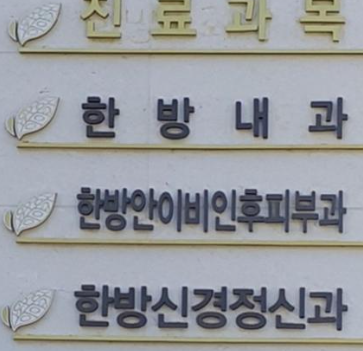
This is the part tourists often get wrong. In Korea, clinics are usually separated by department.
Use these Korean search terms on Naver Map or KakaoMap:
| Symptom or Need | Korean Search Term | Meaning |
|---|---|---|
| Cold, fever, stomach pain | 내과 | Internal medicine |
| Skin rash, acne, allergy | 피부과 | Dermatology |
| Tooth pain | 치과 | Dental clinic |
| Eye problem | 안과 | Eye clinic |
| Ear, nose, throat | 이비인후과 | ENT clinic |
| Bone, joint, muscle pain | 정형외과 | Orthopedics |
| Women’s health | 산부인과 | OB-GYN |
| Child illness | 소아과 | Pediatrics |
| Mental health | 정신건강의학과 | Psychiatry |
| Emergency | 응급실 | Emergency room |
For example, if you have a sore throat and blocked nose, search 이비인후과. If you have stomach pain or fever, search 내과. If you have a skin reaction after skincare or food, search 피부과.
Do not just search “hospital.” Search the department you actually need.
4. How to Find an English-Friendly Clinic
Not every clinic in Korea has English-speaking staff. In tourist-heavy areas, you may have a better chance, but it is not guaranteed.
Good areas to search include:
- Myeongdong
- Hongdae
- Itaewon
- Gangnam
- Seoul Station
- Jamsil
- COEX / Samseong
- Haeundae in Busan
- Seomyeon in Busan
Search terms that may help:
| Search Term | Meaning |
|---|---|
| English clinic Seoul | English-speaking clinic |
| 영어 가능 병원 | Hospital or clinic with English support |
| 외국인 진료 병원 | Hospital for foreign patients |
| 국제진료센터 | International healthcare center |
| 외국인 환자 | Foreign patient |
Seoul Medical Tourism Center says it provides access to medical institutions, appointment help, and department-specific information for medical visitors. It also lists English, Chinese, and Japanese contact numbers.
5. What to Bring to a Korean Clinic
Bring more information than you think you need.
| Bring This | Why It Helps |
|---|---|
| Passport | Identification |
| Travel insurance details | Payment or claim documents |
| Korean address | Clinic forms may ask for it |
| Phone number | Contact information |
| List of symptoms | Helps explain quickly |
| Medication list | Prevents unsafe combinations |
| Allergy information | Very important |
| Previous diagnosis | Useful for chronic conditions |
| Credit card or cash | Payment method |
| Translation app | Helps with Korean forms |
If you take regular medication, write the generic drug name, not only the brand name from your country. Brand names can differ by country.
Also, take photos of rashes, swelling, or symptoms if they come and go. This can help the doctor understand your condition.
6. What Happens During a Clinic Visit?
A normal clinic visit in Korea is usually simple.
The process often looks like this:
- Enter the clinic.
- Go to the reception desk.
- Give your name and basic information.
- Explain your symptoms.
- Wait for your turn.
- See the doctor.
- Pay at the front desk.
- Receive a prescription if needed.
- Take the prescription to a nearby pharmacy.
- Buy the medicine.
In many cases, the clinic and pharmacy are close to each other. Some clinics may even tell you which pharmacy to visit.
However, do not expect every clinic to explain everything in English. Prepare simple symptom phrases before you go.
7. How Prescriptions Work in Korea
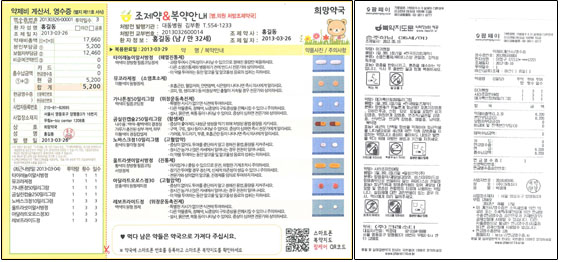
In Korea, doctors usually give prescriptions, and pharmacies dispense the medicine.
That means you may visit two places:
| Step | Place |
|---|---|
| Diagnosis | Clinic or hospital |
| Medicine | Pharmacy |
The Korean word for prescription is 처방전. The Korean word for pharmacy is 약국.
Useful words:
| Korean | Meaning |
|---|---|
| 처방전 | Prescription |
| 약 | Medicine |
| 약국 | Pharmacy |
| 하루 세 번 | Three times a day |
| 식후 | After meals |
| 식전 | Before meals |
| 졸림 | Drowsiness |
| 부작용 | Side effect |
If you already wrote a separate pharmacy guide, internally link it here because readers may need both topics.
8. How Much Does It Cost?
Medical cost depends on the clinic, hospital, treatment, test, insurance status, and whether you are using a foreign-patient service.
A small local clinic visit may be much cheaper than a large hospital visit. However, tests, procedures, imaging, emergency care, or specialist treatment can increase the cost quickly.
Before treatment, ask:
| Question | Korean Meaning |
|---|---|
| How much is the consultation? | 진료비가 얼마예요? |
| Is this covered by insurance? | 보험 적용돼요? |
| How much is the test? | 검사비가 얼마예요? |
| Can I get a receipt? | 영수증 받을 수 있나요? |
| Can I get medical documents? | 진료 서류 받을 수 있나요? |
Always keep your receipts, prescription papers, diagnosis documents, and payment records. Your travel insurance company may ask for them later.
9. Travel Insurance: Do Not Skip This
Travel insurance matters because even a simple medical visit can become expensive if you need tests, emergency care, or hospital treatment.
Before your trip, check whether your insurance covers:
- Outpatient clinic visits
- Emergency room visits
- Prescription medicine
- Hospitalization
- Dental emergencies
- Medical evacuation
- Pre-existing conditions
- COVID or infectious disease treatment
- Sports or hiking injuries
- Cosmetic or elective treatment exclusions
Many tourists assume “I probably won’t need it.” That is exactly when something happens.
Korea has good medical care, but good care does not mean free care for tourists.
10. What If You Need Medical Help in English?
Use official foreigner support systems when possible.
Medical Korea Information Center provides medical institution information and consultation services for foreign patients in English, Chinese, Russian, and Japanese. It can also assign an interpreter if needed.
Seoul Medical Tourism Center also provides medical service information and contact numbers for English, Chinese, and Japanese support.
This can be useful when:
- You do not know which department to visit
- You need an English-speaking clinic
- You need help making an appointment
- You need interpretation support
- You are considering a medical procedure
- You need foreign-patient guidance
Do not rely only on random blog comments when it comes to medical care. Use official support channels when possible.
11. When You Should Not Use a Small Clinic
A small clinic is convenient, but it is not always enough.
Go to emergency care or a larger hospital if you have:
- Chest pain
- Trouble breathing
- Severe allergic reaction
- Fainting
- Stroke symptoms
- Heavy bleeding
- Severe abdominal pain
- Serious head injury
- Broken bone
- Severe burn
- High fever with serious symptoms
- Sudden severe pain
- Serious infection signs
VisitSeoul states that in an accident or medical emergency, travelers can dial 119 from anywhere in Korea.
For mild symptoms, a clinic can be fine. For serious symptoms, do not try to save time or money. Get urgent help.
12. Common Tourist Mistakes
Avoid these mistakes when using medical care in Korea.
| Mistake | Why It Is Bad |
|---|---|
| Searching only “hospital” | You may find the wrong department |
| Going to ER for mild symptoms | It can cost more and take longer |
| Waiting too long | Symptoms may get worse |
| Not bringing passport | Registration may be harder |
| Not keeping receipts | Insurance claims may fail |
| Not knowing allergies | Medication risk |
| Using only English map searches | Korean terms may work better |
| Expecting every doctor to speak English | Not guaranteed |
| Ignoring pharmacy instructions | Medicine may be taken incorrectly |
| Doing cosmetic treatments too casually | Medical procedures still carry risk |
The biggest mistake is choosing the place by map distance only. The closest clinic is not always the right clinic.
13. Useful Korean Phrases at a Clinic
Save these phrases before your trip.
| English | Korean |
|---|---|
| I am sick. | 몸이 아파요. |
| I have a fever. | 열이 있어요. |
| My stomach hurts. | 배가 아파요. |
| My throat hurts. | 목이 아파요. |
| I have diarrhea. | 설사를 해요. |
| I feel nauseous. | 메스꺼워요. |
| I have an allergy. | 알레르기가 있어요. |
| I need a doctor. | 의사가 필요해요. |
| I need a prescription. | 처방전이 필요해요. |
| I do not speak Korean. | 한국어를 못해요. |
| Is English available? | 영어 가능해요? |
| Can I get a receipt? | 영수증 받을 수 있나요? |
The most useful phrase is:
영어 가능한 의사 선생님 계세요?
“Is there an English-speaking doctor?”
14. Best Strategy for Tourists
Here is the safest system:
First, decide whether it is an emergency. If it is serious, use emergency care.
Second, choose the right department. Do not search only “hospital.”
Third, search in Korean if possible. Use terms like 내과, 피부과, 이비인후과, or 정형외과.
Fourth, bring your passport, insurance details, medication list, and allergy information.
Fifth, keep all receipts and documents.
Finally, use official foreigner medical support services if language becomes a problem.
This system is simple, but it can save you from wasting time at the wrong clinic.
15. My Honest Verdict: Is It Hard to Use Hospitals in Korea?
Using a clinic or hospital in Korea is not impossible for tourists. In fact, Korea has many clinics, fast service, and strong medical infrastructure.
The hard part is choosing the right place.
If you know the difference between a clinic, hospital, emergency room, pharmacy, and international healthcare center, the process becomes much easier.
So do not panic when you get sick in Korea. Search the right department, bring the right documents, ask for English support when needed, and keep every receipt.
Your trip may be interrupted, but it does not have to be ruined.
FAQ
Can tourists go to hospitals in Korea?
Yes. Tourists can visit clinics and hospitals in Korea. For non-emergency symptoms, a local clinic may be easier than a large hospital.
What should I search if I have a cold in Korea?
Search 내과 for internal medicine or 이비인후과 for ear, nose, and throat symptoms.
Do Korean doctors speak English?
Some do, especially in tourist areas or international healthcare centers. However, English is not guaranteed at every local clinic.
Do I need a prescription in Korea?
Some medicines require a doctor’s prescription. After seeing a doctor, you may receive a prescription and take it to a nearby pharmacy.
Should I go to the emergency room for mild symptoms?
Usually, no. For mild symptoms, a local clinic is often simpler. For serious symptoms, use emergency care immediately.
What number should I call for disease information in Korea?
KDCA says the 1339 call center provides information and guidelines on major diseases and infectious disease reporting.