If you’re new to Korea, trash disposal can feel confusing at first—especially because you can’t just use any random plastic bag. The good news is that once you learn Korea’s 3-lane system, it becomes easy:
- Regular trash (goes in official “pay-as-you-throw” bags)
- Food waste (separate collection / bags / RFID bins)
- Recycling (sorted by material and kept reasonably clean)
In short (the “don’t get in trouble” version)
- Regular trash: Use the official district bag (종량제봉투).
- Food waste: remove non-food items + drain liquids before tossing.
- Recycling: empty → quick rinse → dry → sort by category.
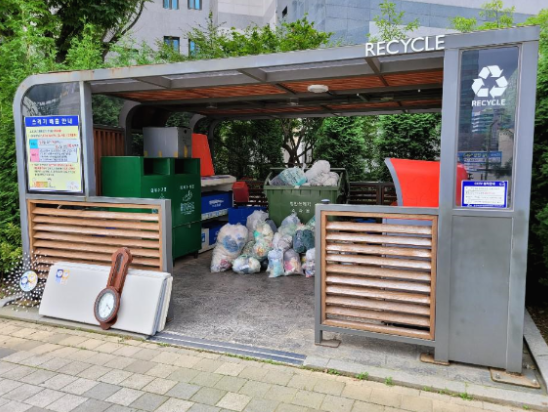
1) Step zero: check your building’s rules (yes, it matters)
Korea’s system is consistent in concept, but drop-off locations and collection days can vary by neighborhood and building type.
Look for:
- A notice board in the lobby/elevator
- Signs near the trash area (often list days/times and categories)
- Labeled bins at the recycling station
If you can’t find any rules, ask your landlord/manager:
“Which days and where do we put out regular trash and recycling?”
2) Regular trash = official “pay-as-you-throw” bag
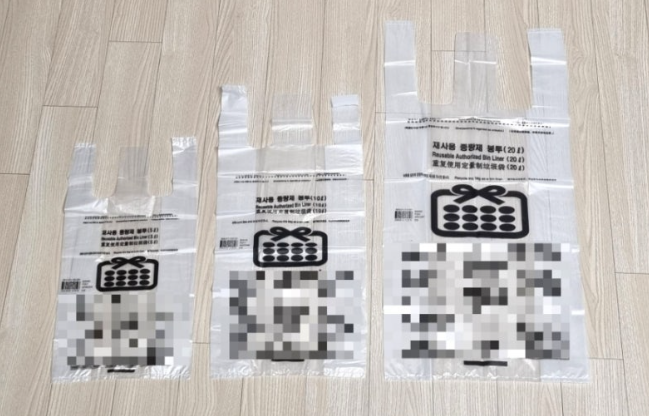
Regular trash (non-recyclables) goes into the official bag sold for your area. This is the core idea of Korea’s volume-based waste fee (“pay as you throw”).
Where to buy the bags
Most commonly:
- Convenience stores
- Supermarkets
- Neighborhood marts
If you need a phrase: “종량제봉투 주세요.” (Official trash bag, please.)
What belongs in regular trash
Put these in the official bag:
- Tissues, paper towels, masks
- Dirty wrappers and packaging
- Contaminated plastics (oily/greasy/saucy containers that won’t wash clean)
- Mixed trash you can’t separate
What shouldn’t go in regular trash?
- Food scraps (food waste stream)
- Recyclables that are clean enough to sort (paper, cans, bottles, etc.)
3) Food waste: separate, drain, and “food only.”
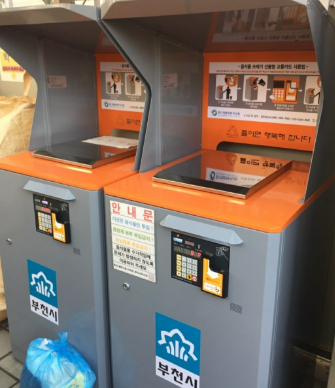
Food waste is collected separately, and Korea has multiple ways to measure/charge for it (RFID weighing systems, stickers/chips, or food-waste bags).
What counts as food waste (generally)
- Leftovers (rice, noodles, side dishes)
- Fruit/vegetable scraps
What to remove first (common beginner mistake)
Before tossing, remove:
- Plastic bags, wrappers, rubber bands
- Toothpicks, forks/spoons, and any non-food “foreign substances.”
Many districts explicitly instruct: remove foreign substances and drain water.
The #1 tip: drain the liquid
Liquid causes odor, leaks, and complaints.
Even a quick drain (strainer / sink) makes life easier—especially in summer.
How food waste is collected (depends on your building)
- RFID / smart bin: you open it with a card/tag, and it measures weight
- Food-waste bags: You buy dedicated bags and tie them up
4) Recycling: clean + sorted = recyclable
In many places, “recycling” isn’t one bin. You usually sort by type (paper, glass, metal cans, vinyl/plastic, styrofoam, etc.).
Use this simple rule: Empty → rinse → dry → sort.
Paper & cardboard
- Flatten boxes
- Remove tape/stickers if possible.
- If it’s greasy/food-soaked, it often becomes regular trash.
Cans & glass bottles
- Empty completely and rinse
- Don’t leave liquid inside.
Plastic containers
- If it’s reasonably clean after rinsing: recycle
- If it stays oily/saucy and won’t clean: treat as regular trash (this is the most common mistake people make)
5) Apartment vs one-room/villa: what changes?
Apartments (usually easiest)
- Dedicated recycling station
- Clear labeling and posted rules.
- Less risk of complaints if you follow sorting
Villas / one-rooms (more strict about timing/location)
- Often, a curbside collection spot
- Sometimes time-based (e.g., evening drop-off)
- More likely to get neighbor complaints if you put bags out wrong
6) Cost snapshot (USD) — real example table
Trash bag prices vary by district/city, but here’s a concrete example from Seocho-gu (Seoul) for common sizes.
USD conversions below use an early-March 2026 rate of around 1 USD ≈ 1,498 KRW (rates fluctuate).
| Regular trash (official bag) | pay per bag | 10L / 20L / 50L | 250 / 490 / 1,250 | $0.17 / $0.33 / $0.84 |
| Food waste (food-waste bag) | pay per bag (or RFID by weight) | 10L / 20L | 1,000 / 2,000 | $0.67 / $1.34 |
| Recycling | sorted bins | — | — | usually $0 |
(Again: your neighborhood/building may differ—but this gives you a realistic baseline.)
7) Bulky items (furniture, large trash)
Chairs, desks, mattresses, etc., are typically handled as large waste with a separate process (often requires a sticker/payment and a pickup or designated drop method). Many district guides list “large general waste” separately from normal trash.
8) Top 10 mistakes foreigners make (avoid these)
- Using a random plastic bag for regular trash
- Mixing food waste into regular trash
- Not draining food waste (odor + leaks)
- Throwing food-stained plastic into recycling
- Not flattening cardboard boxes.
- Leaving bags out at the wrong time (especially villas/one-rooms)
- Not sorting recycling by type (where required)
- Tossing bottles/cans without emptying them
- Assuming rules are identical in every neighborhood
- Ignoring the posted building signs (they’re the “real rules” for your spot)
9) Copy-paste checklist (beginner safe mode)
Use this until it becomes automatic:
Regular trash:
- Dirty / greasy / mixed → official bag
Food waste:
- Food scraps only
- Remove plastic + drain liquids.
Recycling:
- Empty → rinse → dry
- Sort by paper / plastic / cans / glass
Where & when:
- Apartment: follow recycling station signs
- Villa/one-room: follow curbside timing/location