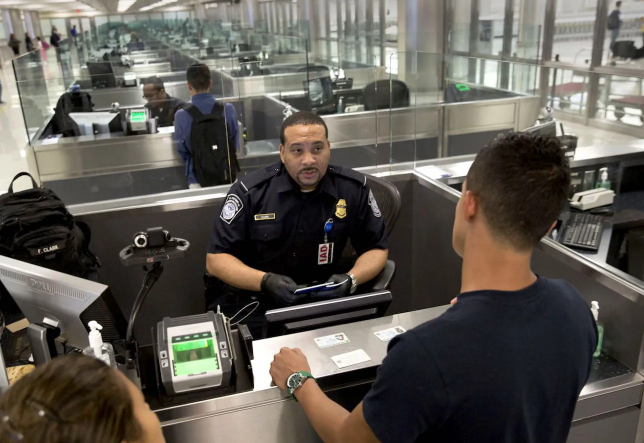
If you are flying to South Korea in 2026, you usually do not need both a K-ETA and an e-Arrival Card. In most cases, you need one or the other, depending on your passport, visa status, and entry type. The e-Arrival Card is Korea’s online entry declaration, while the K-ETA is a separate travel authorization for eligible visa-free travelers.
In Short
- The e-Arrival Card is an online arrival declaration for many foreign travelers entering Korea. It is free and can be submitted within 3 days before arrival.
- The K-ETA is a travel authorization for eligible visa-free travelers. It has a 10,000 KRW fee, usually takes up to 72 hours or less to assess, and is generally valid for 3 years unless your passport expires sooner.
- If you already have a valid K-ETA, you are generally exempt from submitting an arrival card when you enter Korea.
- Many visa-free travelers from eligible countries remain temporarily exempt from applying for K-ETA until December 31, 2026, but they may still need to submit an e-Arrival Card instead.
1. What Is the Korea e-Arrival Card?
The Korea e-Arrival Card is the online version of Korea’s entry declaration form. Instead of filling out a paper form after landing, travelers can now complete it online before the trip. Korea’s Ministry of Justice launched the system on February 24, 2025.
The official e-Arrival Card website says the service is free of charge and available from 3 days before arrival in Korea. That makes it one of the easiest pre-arrival steps for travelers who need an entry declaration but do not hold a valid K-ETA.
2. What Is K-ETA?
K-ETA stands for Korea Electronic Travel Authorization. It is not a visa. Instead, it is an online travel authorization for people from eligible visa-free countries who want to enter Korea for short stays such as tourism, visiting family, attending events, or business meetings.
According to the official K-ETA guide, the fee is 10,000 KRW plus a separate online payment charge. The assessment usually takes 72 hours or less, although delays can happen. Once approved, a K-ETA can usually be used multiple times during its validity period, which is generally 3 years unless the passport expires earlier.
3. Korea e-Arrival Card vs K-ETA: The Main Difference
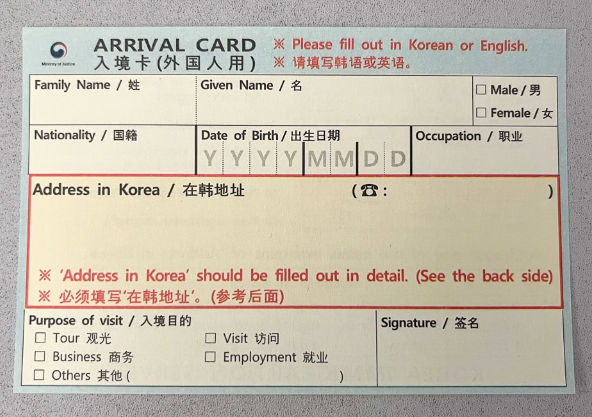
The easiest way to understand this is simple:
- e-Arrival Card = entry declaration
- K-ETA = travel authorization
The e-Arrival Card tells Korean immigration about your trip and stay details before arrival. The K-ETA, on the other hand, is permission to board and travel to Korea without a visa for eligible travelers. They are related, but they are not the same thing.
| Situation | K-ETA | e-Arrival Card |
|---|---|---|
| Traveler from an eligible visa-free country who still needs K-ETA | Yes | No, if entering with valid K-ETA |
| Traveler from a country temporarily exempt from K-ETA through Dec. 31, 2026 | Usually no | Usually yes |
| Traveler entering Korea with a valid visa | No | Usually yes |
| Traveler with a Korean Residence Card | No | No |
| Traveler who has K-ETA but enters using a visa | K-ETA may exist, but visa governs entry | Yes |
The key point is that a valid K-ETA usually removes the need for an arrival card, but a visa holder still needs the e-Arrival Card in many normal travel cases. The official e-Arrival Card guide also says that people who hold K-ETA but enter with a visa must complete the e-Arrival Card.
4. Who Usually Needs the e-Arrival Card in 2026?
The official Korea e-Arrival Card notice says that all foreign nationals entering Korea are generally required to submit an entry declaration, but several groups are exempt. Exempt categories include Korean residence card holders, valid K-ETA holders, some group visa holders, some visa-free transfer group travelers, and foreign airline crew.
So, in practical travel terms, the e-Arrival Card is especially relevant for:
- Visa holders
- Travelers from K-ETA temporarily exempt countries
- Travelers who do not fall under another exemption
- People entering without a residence card or valid K-ETA
That is why many travelers now search for “Do I need K-ETA or e-Arrival Card for Korea?” The answer depends less on your destination and more on your entry status.
5. Who May Still Need K-ETA?
K-ETA is still relevant in 2026. Korea Tourism Organization says the government extended the temporary K-ETA exemption period until December 31, 2026, but that applies to nationals of countries or regions covered by that exemption. The official K-ETA site still maintains the list of eligible countries, stay periods, and exemption rules.
In other words, some travelers still need K-ETA, while some do not. Also, even travelers who are temporarily exempt may still choose to apply for K-ETA because it can make entry more convenient by removing the arrival card step. Korea Tourism Organization explicitly notes that exempt travelers may still apply voluntarily for those benefits, though the normal fee still applies.
6. Common Mistakes Travelers Make
1) Thinking K-ETA and the e-Arrival Card are the same thing
They are not. One is a travel authorization, and the other is an entry declaration. Confusing them can lead to last-minute stress before boarding.
2) Assuming the e-Arrival Card costs money
The official e-Arrival Card site clearly says the service is free. In fact, the Korean government posted a warning about fake e-Arrival Card websites that look official and ask for payment. The notice says travelers should check for the government domain and logo and avoid unverified URLs.
3) Waiting until the last minute for K-ETA
The official K-ETA guide says assessment typically takes 72 hours or less, but delays can happen. That means applying too close to departure is risky.
4) Believing K-ETA guarantees entry
The official guide says an approved K-ETA does not guarantee admission. A Korean immigration officer still makes the final decision at the port of entry.
7. What Travelers Should Do Before Flying to Korea
If you want the simplest approach, follow this checklist:
Step 1: Check your passport status
Find out whether your nationality is covered by Korea’s temporary K-ETA exemption or whether you still need K-ETA. The official K-ETA site provides the country list and stay periods.
Step 2: Check whether you already have another valid entry status
If you have a valid visa, Korean Residence Card, or other exempt status, your requirement may change.
Step 3: Submit the correct item
- If you need K-ETA, apply early.
- If you do not need K-ETA but still need an arrival declaration, submit the e-Arrival Card within 3 days before arrival.
Step 4: Use only the official websites
This matters even more now because the official e-Arrival Card service has already warned travelers about scam sites asking for payment.
Final Answer
For most travelers, the Korea e-Arrival Card and K-ETA are not interchangeable. In 2026, many travelers will need either a K-ETA or an e-Arrival Card, while some travelers with visas or residence status may need something different. Therefore, the smartest move is to check your entry status first, then use the correct official site before your flight.
If you are unsure, remember this simple rule:
K-ETA is for travel authorization. e-Arrival Card is for entry declaration.
Pingback: Seoul Luggage Storage Mistakes That Ruin Your First Day - Korean Culture Life