Korea is one of the best countries for food, but popular restaurants can become stressful if you do not understand the waiting system.
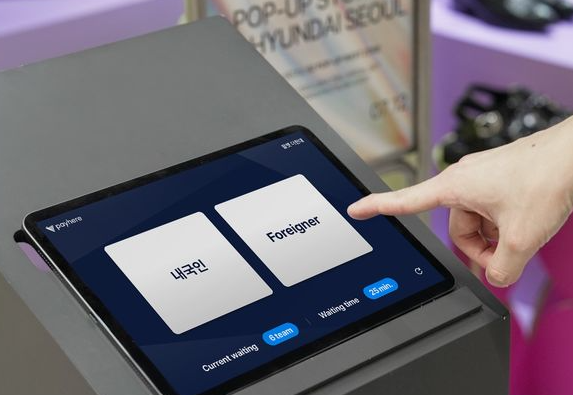
You may arrive at a famous BBQ restaurant, a trendy café, a bagel shop, or a viral noodle place and see no normal line outside. Instead, there is a tablet near the entrance, a QR code, a Korean-only screen, or a staff member asking for a phone number.
This is where many tourists get confused.
In Korea, waiting for restaurants is not always about physically standing in line. Many popular places use digital waiting systems, reservation apps, remote waitlists, phone number alerts, or on-site kiosks. Some restaurants still use old-school paper lists, but many trendy restaurants now expect you to register first and wait nearby.
That means one simple mistake can ruin your meal plan. You may think you are waiting properly, but actually, you never joined the queue.
This Korea restaurant waiting guide explains how the system works, what apps tourists should know, and how to avoid looking completely lost before dinner.
In Short
Korea restaurant waiting systems can include on-site kiosks, QR codes, paper lists, phone number registration, remote waitlists, and reservation apps. Popular restaurants in Korea increasingly use reservation and waiting systems, and some may not accept simple walk-ins during busy periods. VisitKorea notes that many systems used by Korean restaurants have historically required Korean phone numbers or local payment methods, which can create problems for foreign visitors.
For tourists, the most useful app to know is Catchtable Global, which is designed for foreign users. It allows sign-up through Google or Apple, does not require a Korean phone number, supports several languages, and offers restaurant reservation and waiting features.
The biggest rule is simple: when you arrive at a popular restaurant in Korea, do not just stand outside. First, check whether there is a kiosk, QR code, waiting tablet, app reservation, or staff waiting list.
1. Why Restaurant Waiting in Korea Feels Confusing
In many countries, a restaurant line is simple. You see people standing outside, you stand behind them, and eventually you enter.
Korea is not always like that.
At many popular places, the real queue may be hidden inside a tablet, an app, or a QR code. So even if nobody is physically standing outside, there may already be 30 teams waiting.
This confuses tourists because the restaurant can look empty from the outside. You may see open tables, but the staff may still say you need to register, wait, or use an app.
Here is why:
| What You See | What It May Actually Mean |
|---|---|
| Empty-looking tables | Reserved or waiting-list tables |
| No physical line | Digital waitlist already exists |
| Tablet outside | You must register first |
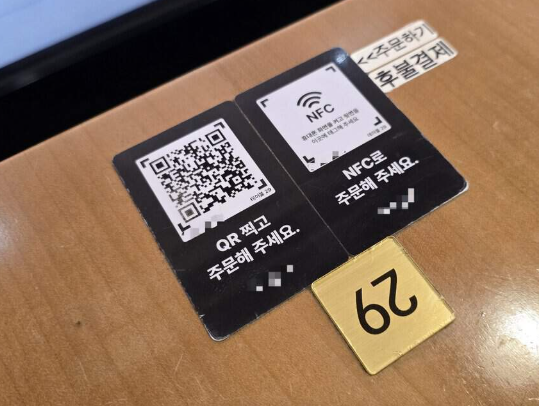
| QR code near entrance | Scan to join the queue |
| Staff asks for phone number | They may send a waiting alert |
| “Reservation only” sign | Walk-ins may not be accepted |
| Long crowd outside | People already registered and are waiting nearby |
So the first lesson is this: in Korea, waiting is often digital.
2. Common Types of Restaurant Waiting Systems in Korea
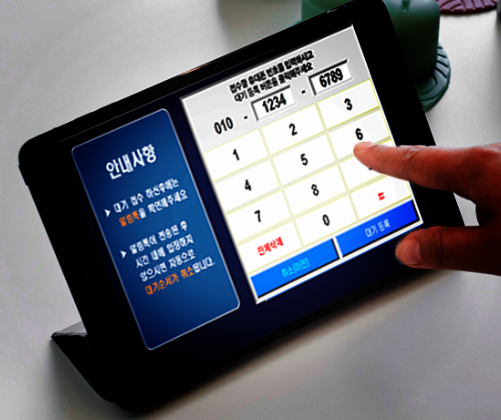
Korean restaurants do not all use the same system. That is why tourists get caught off guard.
Here are the most common types:
| Waiting Type | How It Works | Tourist Difficulty |
|---|---|---|
| Physical line | Stand outside and wait | Easy |
| Paper list | Write your name and party size | Medium |
| Phone number list | Leave a Korean phone number | Hard for tourists |
| Kiosk waiting | Register at a tablet outside | Medium |
| QR waiting | Scan QR code and join online | Medium |
| App waiting | Use Catchtable, Tabling, or another app | Medium |
| Reservation only | Book before visiting | Hard if you did not plan |
Older local restaurants may still use simple paper lists or staff-managed queues. However, trendy restaurants, famous cafés, BBQ spots, brunch restaurants, and viral social media places often use digital systems.
That is why you need to look around the entrance before assuming anything.
3. Catchtable Global: The Most Useful App for Foreign Tourists
For foreign travelers, Catchtable Global is one of the most useful tools for restaurant reservations and waiting in Korea.
According to VisitKorea, Catchtable Global was created for foreign users and allows sign-up through Google or Apple without a Korean phone number. It supports English, Japanese, Simplified Chinese, and Traditional Chinese. It also supports reservations, on-site waiting, and remote waiting depending on the restaurant.
That matters because many tourists do not have:
- Korean phone number
- Korean credit card
- KakaoTalk account
- Korean language ability
- Ability to call restaurants in Korean
Catchtable Global reduces some of those problems.
The app can show whether a restaurant accepts reservations or offers a waitlist. VisitKorea explains that users may see buttons such as “Reserve” or “Join Remote Waitlist” depending on the restaurant’s settings.
However, not every restaurant is on Catchtable Global. Some restaurants use other apps, some only accept Korean-language reservations, and some still require on-site waiting.
So think of Catchtable Global as a strong tool, not a magic key to every restaurant in Korea.
Catchtable Global restaurant reservations in Korea
4. What About Tabling?
Another major restaurant waiting and reservation app in Korea is Tabling.
Tabling’s Google Play listing describes it as a restaurant app used for waiting, reservations, takeout, and table reservations. It also mentions features such as checking available seats nearby, remote line-up before arriving, estimated wait times, and instant reservations without phone calls.
However, foreign tourists may find Tabling more difficult than Catchtable Global depending on language support, account setup, and phone verification. Some tourists can use it without major issues, while others may struggle.
So the practical advice is:
| App | Best For |
|---|---|
| Catchtable Global | Foreign tourists who want easier reservations and waitlists |
| Tabling | More local Korean restaurants and waiting systems |
| Naver Map | Searching restaurants and checking basic info |
| KakaoMap | Local map search and directions |
| Papago | Translating kiosk screens and signs |
If you only want to prepare one restaurant app before visiting Korea, start with Catchtable Global.
5. How to Join a Restaurant Waitlist in Korea
The exact process depends on the restaurant, but the basic pattern is usually similar.
Step 1: Look near the entrance
Before asking the staff, check the entrance. Look for a tablet, kiosk, QR code, signboard, or waiting sheet.
Step 2: Check the language button
Many kiosks start in Korean. Look for English, Japanese, Chinese, or a globe icon. If the screen looks impossible, try changing the language first.
Step 3: Enter your party size
Most systems ask how many people are dining. Some may ask whether you need a baby chair or special seating.
Step 4: Enter contact information
This is where tourists may struggle. Some systems ask for a Korean phone number. Others allow email, app login, QR waiting, or foreign-friendly registration.
Step 5: Check your waiting number
After registering, you may receive a waiting number. Do not leave without knowing your number.
Step 6: Stay nearby
Even if remote waiting is available, do not go too far. If your turn comes and you are not there, the restaurant may cancel your waiting spot.
Step 7: Watch alerts carefully
Check app notifications, email, waiting page, kiosk screen, or staff calls. Some restaurants move quickly once your turn is near.
6. Useful Korean Words for Restaurant Waiting
These words can save you a lot of confusion.
| Korean | Meaning |
|---|---|
| 웨이팅 | Waiting |
| 대기 | Waiting / queue |
| 대기번호 | Waiting number |
| 예약 | Reservation |
| 현장대기 | On-site waiting |
| 원격대기 | Remote waiting |
| 입장 | Entry |
| 호출 | Call / notification |
| 인원 | Number of people |
| 몇 명 | How many people |
| 전화번호 | Phone number |
| 취소 | Cancel |
| 마감 | Closed / no more waiting |
| 브레이크타임 | Break time |
| 재료소진 | Sold out |
The most important words are 웨이팅, 대기, 예약, and 대기번호.
If you only remember one sentence, use this:
웨이팅 해야 하나요?
“Do I need to join the waitlist?”
7. The Korean Phone Number Problem
This is one of the biggest problems for tourists.
Some restaurants still use systems that expect a Korean phone number. This is because the restaurant sends an alert when your table is ready. For locals, this is convenient. For tourists without a Korean number, it can be annoying.
Possible solutions:
| Situation | What You Can Try |
|---|---|
| Kiosk asks for Korean number | Ask staff for help |
| QR waiting allows email login | Use that option |
| Catchtable Global available | Use the app |
| Hotel concierge nearby | Ask them to help call or reserve |
| No foreign-friendly option | Choose another restaurant |
| You have Korean eSIM with number | Try using that number |
Do not get angry immediately if the restaurant struggles with your foreign number. The system may simply not accept it.
A polite sentence helps:
한국 전화번호가 없는데, 웨이팅 가능할까요?
“I do not have a Korean phone number. Can I still join the waitlist?”
8. Reservation vs Waiting: They Are Not the Same
Tourists often confuse reservation and waiting.
They are different.
| System | Meaning |
|---|---|
| Reservation | You book a specific time before visiting |
| Waiting | You join the queue after or before arriving |
| Remote waiting | You join the queue before reaching the restaurant |
| On-site waiting | You must register at the restaurant |
| Walk-in | You enter without booking or waiting |
A restaurant may accept reservations for dinner but only waiting for lunch. Another restaurant may accept no reservations and only use same-day waiting. Some trendy places open reservations days or weeks in advance.
VisitKorea explains that Catchtable Global separates restaurant reservations and waiting features, including on-site and remote waiting options depending on the restaurant.
So before going to a famous restaurant, check whether it is:
- Reservation available
- Waitlist only
- Remote waiting available
- On-site waiting only
- Walk-in friendly
- Closed for break time
- Already sold out
This can prevent a wasted trip.
9. Best Times to Avoid Long Restaurant Waits
You cannot completely avoid lines at famous restaurants, but you can reduce the pain.
Bad times:
| Time | Why It Is Bad |
|---|---|
| Friday dinner | After-work crowd |
| Saturday lunch | Tourist and local crowd |
| Saturday dinner | Worst timing for famous spots |
| Sunday lunch | Brunch and family crowd |
| Public holidays | Very crowded |
| 12:00–13:30 | Peak lunch |
| 18:00–20:00 | Peak dinner |
Better times:
| Time | Why It Helps |
|---|---|
| Weekday 11:00 | Before lunch rush |
| Weekday 14:00 | After lunch peak |
| Weekday 17:00 | Before dinner peak |
| Rainy days | Some places are quieter |
| Right after opening | Good for no-reservation spots |
For famous restaurants, arriving “a little early” is often not enough. Arrive before the peak starts.
10. What to Do While Waiting
One nice thing about Korean digital waiting systems is that you often do not need to stand directly outside the restaurant.
If your waiting status can be checked on your phone, you can usually stay nearby, shop, walk around, or sit in a café. However, do not go too far.
Good waiting activities:
- Visit a nearby convenience store
- Walk around the neighborhood
- Check nearby shops
- Sit in a café
- Take photos nearby
- Browse the menu in advance
- Prepare payment method
- Check your waiting status every few minutes
Bad waiting activities:
- Taking a subway to another area
- Starting a long museum visit
- Turning off notifications
- Ignoring email alerts
- Going too far from the restaurant
- Leaving one person behind without knowing the system
The goal is to be close enough to return quickly when your number is called.
11. Common Tourist Mistakes
Tourists usually make the same restaurant waiting mistakes in Korea.
| Mistake | Why It Hurts |
|---|---|
| Standing outside without registering | You may not actually be in line |
| Ignoring the kiosk | The kiosk may be the real queue |
| Arriving during peak dinner | Wait time can become painful |
| Not checking break time | Restaurant may be closed temporarily |
| Not checking sold-out status | Popular items may be gone |
| Assuming English is available | Many systems are still Korean-first |
| Leaving too far after registering | You may miss your turn |
| Forgetting your waiting number | Staff may not know who you are |
| Only using Google Maps | Some local info may be limited |
| Not preparing apps before the trip | Setup takes time when hungry |
The worst mistake is waiting physically without joining the digital queue. You may waste 30 minutes and still have no place in line.
12. Should You Skip Famous Restaurants With Long Waits?
Sometimes, yes.
Not every viral restaurant is worth a two-hour wait. Korea has so much good food that you do not need to destroy your schedule for one place.
Use this simple rule:
| Situation | Recommendation |
|---|---|
| Famous restaurant near your hotel | Worth trying |
| Remote waiting available | Worth trying |
| Reservation available | Worth booking |
| More than 90 minutes wait | Think carefully |
| You are starving | Go somewhere else |
| You have a tight schedule | Skip it |
| You want the exact viral spot | Prepare early |
If a restaurant is truly important to your trip, plan it in advance. If it is just “popular on TikTok,” do not let it control your day.
13. My Honest Verdict: Is Korea’s Restaurant Waiting System Tourist-Friendly?
Korea’s restaurant waiting system is convenient once you understand it. But for first-time tourists, it can feel confusing.
The problem is not that the system is bad. The problem is that the rules are not always obvious. A tourist may not know whether to stand in line, scan a QR code, use Catchtable, enter a phone number, or ask staff.
Still, you can handle it easily if you follow one rule:
Before waiting, confirm how the restaurant manages the queue.
Look for the kiosk. Check the QR code. Ask if you need to register. Use Catchtable Global when possible. Keep your waiting number. Stay nearby.
Do that, and you will avoid the most embarrassing tourist mistake: standing in line when you were never actually in line.
FAQ
Do Korean restaurants require reservations?
Not always. Many restaurants accept walk-ins, but popular restaurants may use reservations, digital waiting systems, or remote waitlists.
What app should foreigners use for Korean restaurant reservations?
Catchtable Global is one of the best options for tourists because it is designed for foreign users and does not require a Korean phone number for account creation.
Do I need a Korean phone number for restaurant waiting?
Sometimes yes, sometimes no. Some older systems or local apps may ask for a Korean phone number, but foreign-friendly tools such as Catchtable Global can reduce this problem.
What does 웨이팅 mean?
웨이팅 means waiting or waitlist. You will often see it at popular restaurants and cafés.
What should I do if the kiosk is only in Korean?
Look for a language button first. If there is no English option, use a translation app or ask staff politely.
Can I leave after joining the waitlist?
Usually, you can stay nearby, but do not go too far. If you miss your turn, your waiting spot may be canceled.