If you visit South Korea, you might wonder why there are so many convenience stores in Korea.
You can walk just a few minutes and find multiple stores, sometimes even side by side. In some neighborhoods, it feels like there’s one on every corner. So why are there so many convenience stores in Korea?
In Short
There are numerous convenience stores in Korea due to high urban population density, a strong late-night culture, aggressive franchise expansion, low entry barriers for small business owners, and a consumer lifestyle that prioritizes speed and convenience.
Let’s break it down.
1. Why Are There So Many Convenience Stores in Korea?
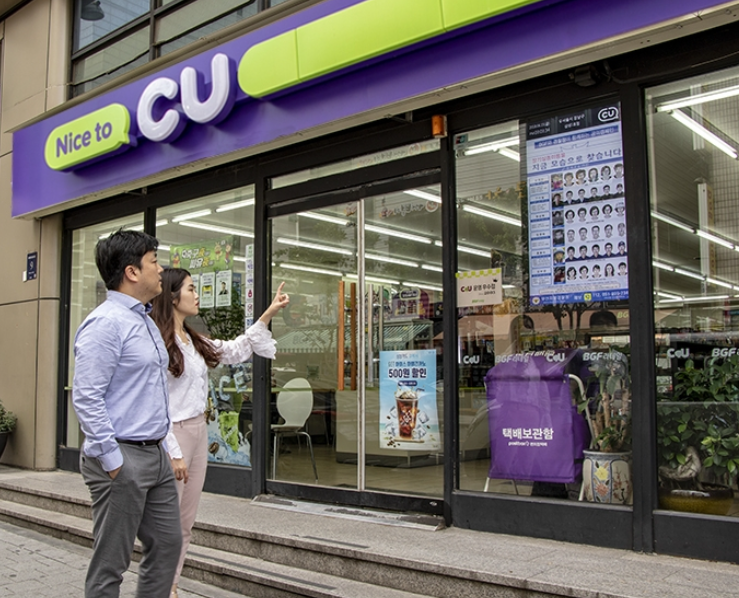
South Korea has over 55,000 convenience stores across the country.
With a population of around 51 million, this makes Korea one of the most convenience-store-dense countries in the world.
For comparison:
| Country | Estimated Convenience Stores | Population |
|---|---|---|
| South Korea | 55,000+ | ~51 million |
| Japan | 58,000+ | ~125 million |
| United States | 150,000+ | ~330 million |
When adjusted for population size, Korea’s density is remarkably high.
Major brands include:
- CU
- GS25
- 7-Eleven (Korean branch)
In the busy districts of Seoul, it’s common to see multiple brands within just a few minutes’ walking distance.
2. High Population Density in Urban Areas
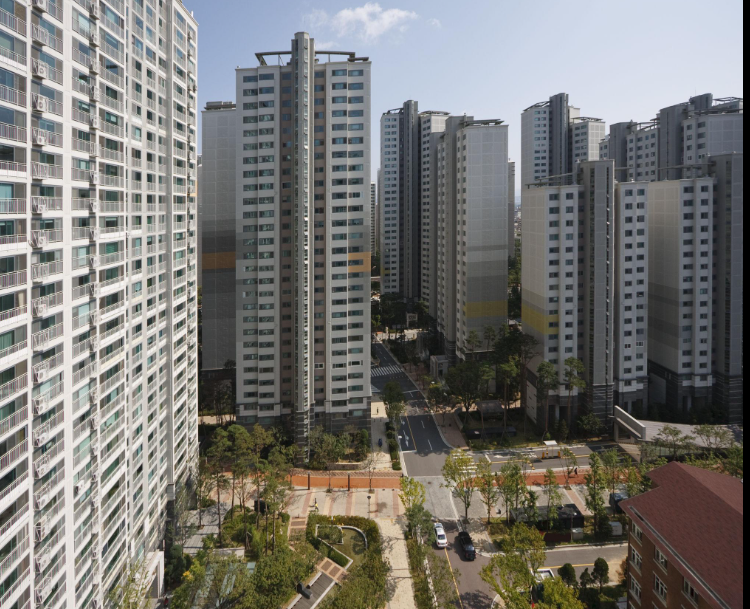
Over 80% of South Korea’s population lives in urban areas.
Cities like Seoul are highly dense, with large apartment complexes and compact residential neighborhoods.
In this environment:
- Small-format retail is more efficient than supermarkets.
- Walking distance matters more than parking space.
- High foot traffic supports neighborhood stores.
Instead of driving to a big store, many Koreans simply walk one or two minutes to a nearby convenience store.
Urban structure naturally supports a high number of small shops.
3. Korea’s Strong Late-Night Culture
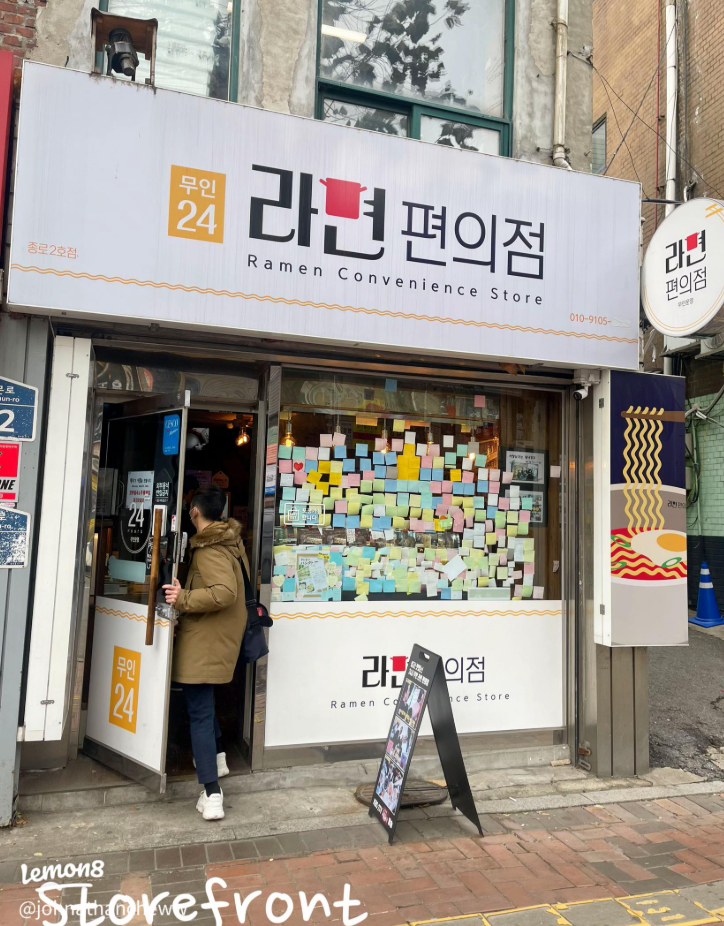
Korea is known for long working hours and an active nightlife.
Restaurants, cafés, and bars often stay open late into the night. Many people finish work late, meet friends, or study after dinner.
Convenience stores support this culture by:
- Operating 24 hours
- Selling ready-to-eat meals
- Offering alcohol late at night
- Providing seating areas in some locations
It’s completely normal to buy instant noodles or snacks at 2 AM.
This steady late-night demand keeps stores profitable and encourages more locations to open.
4. Aggressive Franchise Expansion Model
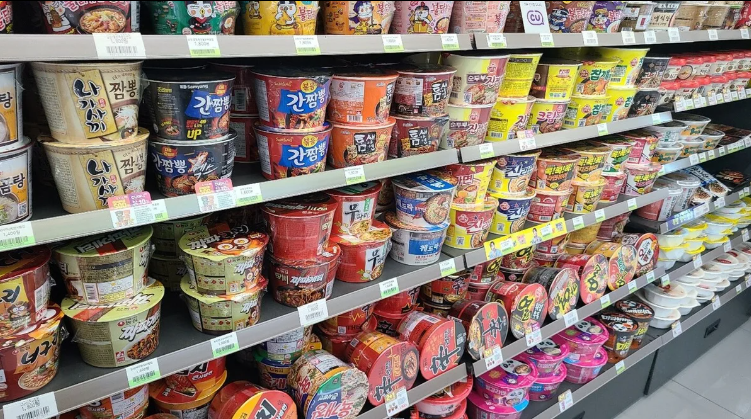
Most Korean convenience stores operate under a franchise system.
Large corporations provide:
- Centralized logistics
- Standardized store layouts
- Marketing support
- Brand recognition
For many small business owners, opening a convenience store is seen as an accessible way to start a business compared to restaurants.
Over the past two decades, franchise-driven expansion has significantly increased the total number of stores across the country.
5. A Consumer Culture That Values Speed and Accessibility
Korean consumers strongly value:
- Speed
- Convenience
- Immediate access
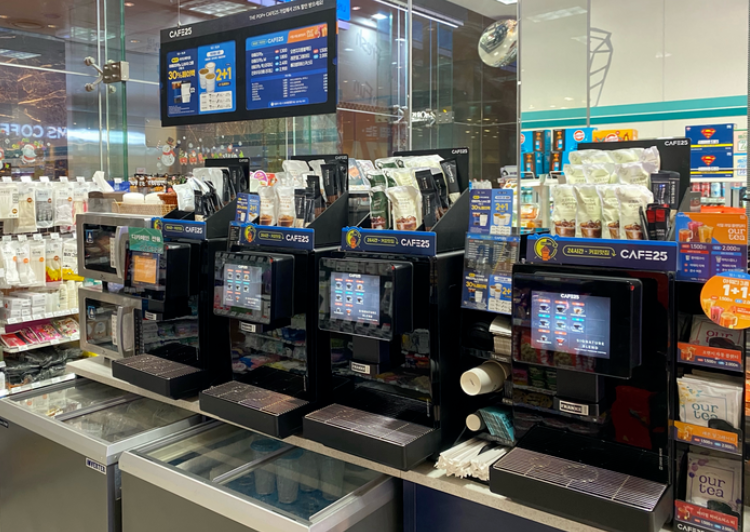
Convenience stores in Korea are not just snack shops. They function as mini lifestyle hubs.
They offer:
- Fresh lunch boxes (dosirak)
- Kimbap and sandwiches
- Fresh coffee machines
- Frozen meals
- Parcel pickup services
- Utility bill payments
- Mobile top-ups
In many neighborhoods, convenience stores act as essential daily service centers.
Because everyday life moves quickly in Korea, small stores that provide instant access thrive.
Is the Market Oversaturated?
Some experts argue that certain areas are oversaturated.
In highly competitive districts, multiple stores operate within a very small radius, reducing individual profit margins.
However, convenience stores remain deeply embedded in Korean daily life because:
- Basic demand remains strong.
- Urban density supports constant foot traffic.
- Product innovation continues
While growth has slowed compared to the early 2000s, the overall system remains stable.
FAQ
1.Are convenience stores cheaper than supermarkets in Korea?
Generally, convenience stores are slightly more expensive than supermarkets. However, the price difference is often small for basic daily items.
2.Why are Korean convenience stores open 24 hours?
늦은 근무 시간과 활발한 야간 유흥 문화는 밤새도록 꾸준한 수요를 창출하여 24시간 영업을 지속 가능하게 합니다.
3.Is it profitable to run a convenience store in Korea?
Profitability depends heavily on location and competition. Some areas are highly competitive, while others maintain stable customer flow.
Final Thoughts
The reason Korea has so many convenience stores isn’t just about business growth.
It’s the result of urban density, late-night culture, franchise systems, and a fast-paced consumer lifestyle.
In Korea, convenience stores aren’t just shops — they’re part of everyday infrastructure.