If you watch Korean news for the first time, Korean politics can look extremely dramatic.
Politicians argue in the National Assembly. Party leaders attack each other on television. Protesters gather in central Seoul. Elections feel emotional. Presidents face intense criticism. Even local elections can become national political battles.
So foreigners often wonder one thing:
Why does Korean politics look so loud?
The answer is not simple, but one good place to start is the relationship between the ruling party and the opposition party.
In Korea, the ruling party usually means the party connected to the current president. The opposition party means the parties outside the ruling government, especially the largest party challenging the president and ruling bloc. As of June 2026, President Lee Jae Myung’s Democratic Party is the ruling party, while the conservative People Power Party is the main opposition force. Reuters reported that Lee’s ruling Democratic Party won most races in the June 2026 local elections, while the People Power Party kept the important Seoul mayor race.
This guide explains Korean politics in a simple, neutral way for foreigners who want to understand the news without getting lost.
1. In Short
Korean politics is mainly shaped by competition between the president, the National Assembly, the ruling party, and the opposition party.
| Term | Meaning |
|---|---|
| Ruling party | The party connected to the current president or government |
| Opposition party | Parties outside the government, especially the largest rival party |
| President | Head of state and government in Korea’s presidential system |
| National Assembly | Korea’s national legislature |
| Conservatives | Usually associated with security, business, anti-communism, and market-friendly policies |
| Liberals / Progressives | Usually associated with reform, welfare, labor issues, and inter-Korean engagement |
| Election | Often treated as a judgment on the current government |
| Protest politics | Street demonstrations are an important part of modern Korean democracy |
The key point is this:
Korea has a presidential system, but the National Assembly can strongly challenge the president.
That is why politics can become very tense when the president’s party and the Assembly majority are not aligned, or when elections become a referendum on the government.
2. What Does “Ruling Party” Mean in Korea?
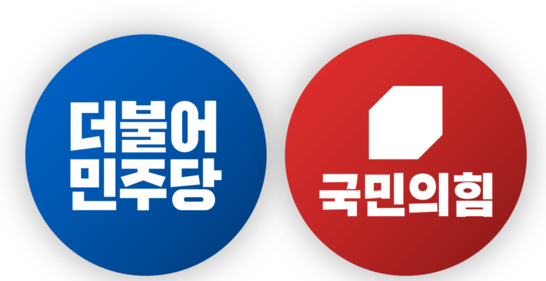
The ruling party is usually the party that supports the current president.
In Korean, ruling party is:
여당
This literally means the party “on the government side.”
The ruling party usually tries to:
- Support the president’s policies
- Pass government-backed bills
- Defend the administration from criticism
- Win elections to protect the president’s power
- Control the political message of the government
- Appoint or support key leaders in the National Assembly
But being the ruling party is not always easy.
If the economy is bad, housing prices rise, scandals happen, or public anger grows, the ruling party can quickly become the main target of criticism.
That is why Korean local elections and parliamentary elections often become a test of the president’s popularity.
3. What Does “Opposition Party” Mean in Korea?
The opposition party is the party outside the ruling government.
In Korean, opposition party is:
야당
This means the party “outside the government side.”
The opposition party usually tries to:
- Criticize the president
- Block or revise government policies
- Investigate scandals
- Win public attention
- Prepare for the next election
- Present itself as the alternative government
The main opposition party is especially important because it can become the next ruling party if it wins the presidency.
In Korea, today’s opposition can become tomorrow’s government very quickly.
That is one reason political conflict feels intense. The stakes are high.
4. Current Example: Democratic Party vs People Power Party
As of June 2026, the basic structure is:
| Political Side | Current Role |
|---|---|
| Democratic Party | Ruling party |
| People Power Party | Main opposition party |
| President | Lee Jae Myung |
| Seoul mayor | Oh Se-hoon, People Power Party |
The June 2026 local elections showed this clearly. Reuters reported that the ruling Democratic Party won 12 of 16 major mayoral and provincial races, while the People Power Party retained Seoul through Mayor Oh Se-hoon.
AP also reported that the Democratic Party performed strongly overall in the 2026 local elections but lost the key Seoul mayor contest to the People Power Party, showing that Korea’s political map remains divided even when one side wins nationally.
This is a useful example for foreigners.
Korean politics is not just “one party wins, everything is settled.” Even after a strong election result, symbolic places like Seoul can still matter a lot.
5. Why Seoul Matters So Much in Korean Politics
Seoul is not just the capital. It is the political, media, economic, and symbolic center of Korea.
Winning Seoul often matters because:
| Reason | Why It Matters |
|---|---|
| Population | Seoul and the capital area hold huge political weight |
| Media attention | National media focuses heavily on Seoul |
| Symbolism | Seoul represents national leadership |
| Economy | Housing, jobs, and development issues are intense |
| Future elections | Seoul results can influence national momentum |
That is why losing or winning Seoul can feel bigger than just one local race.
In 2026, the ruling Democratic Party won many local races, but the People Power Party’s Seoul mayor win still gave the opposition an important political foothold. Reuters described Seoul as a key symbolic contest in the election results.
6. Korea’s Political System: President vs National Assembly
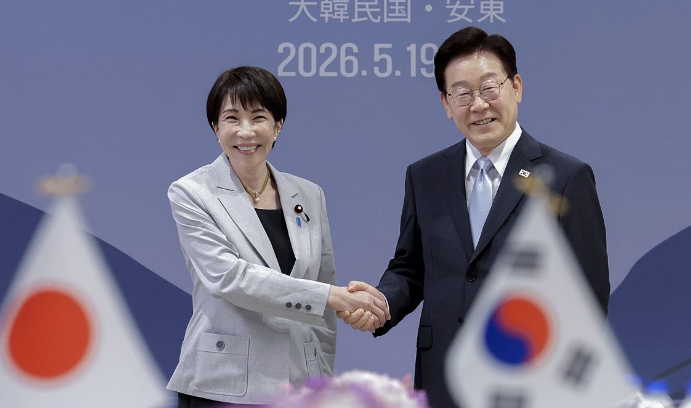
Korea has a presidential system.
The Office for Government Policy Coordination explains that under Korea’s presidential system, the president performs executive functions through the Cabinet and is responsible for deciding important government policies.
But the president is not the only powerful actor.
The National Assembly makes laws, debates budgets, questions officials, and can investigate the government. Korea’s National Atlas describes the National Assembly as the legislative body of the Republic of Korea, made up of members elected by the people.
This creates constant tension.
| Institution | Main Role |
|---|---|
| President | Leads the executive branch |
| Cabinet | Helps run government policy |
| National Assembly | Makes laws and checks the government |
| Ruling party | Supports the president |
| Opposition party | Challenges the president and ruling party |
When the president’s party controls the Assembly, the government may move faster.
When the opposition is strong in the Assembly, politics can become much more confrontational.
7. Why Korean Politics Feels So Polarized
Korean politics often feels polarized because parties are not only debating policy. They are also fighting over history, identity, security, corruption, regional support, and the meaning of democracy.
Common conflict areas include:
| Issue | Why It Becomes Political |
|---|---|
| North Korea | Security vs engagement debate |
| Economy | Growth, jobs, inflation, taxes |
| Housing | Extremely sensitive for young people and families |
| Prosecutorial reform | Linked to power, law, and political investigations |
| Labor policy | Business vs workers’ rights |
| Welfare | Tax burden vs social protection |
| Japan relations | History, security, diplomacy |
| United States and China | Foreign policy balance |
| Corruption scandals | Used heavily in political attacks |
| Media bias claims | Both sides often accuse media unfairness |
For foreign readers, the easiest way to understand Korean politics is this:
Policy matters, but trust and historical memory matter just as much.
8. Conservatives and Liberals in Korea
Korean conservatives and liberals do not always match Western political labels perfectly.
Still, there are broad tendencies.
| Political Camp | Common Tendencies |
|---|---|
| Conservatives | Stronger national security stance, closer U.S. alliance emphasis, market-friendly policies, anti-communist tradition |
| Liberals / Progressives | Political reform, welfare expansion, labor issues, inter-Korean dialogue, civil rights emphasis |
But do not oversimplify.
Korean political parties can change names, merge, split, rebrand, and shift positions. A party’s image can also depend heavily on its leader.
That is why foreigners should be careful when directly comparing Korean parties to Democrats, Republicans, Labour, Conservatives, or other foreign parties.
Korean politics has its own history.
9. Why Korean Parties Change Names So Often
Foreigners may notice something strange.
Korean political parties change names a lot.
This happens because parties often rebrand after:
- Election defeats
- Scandals
- Leadership changes
- Mergers
- Splits
- Impeachment crises
- New presidential campaigns
For example, conservative and liberal parties in Korea have gone through many name changes over the decades. This can make old articles confusing.
A foreign reader may see different party names and think they are completely unrelated. Sometimes they are new parties. Sometimes they are rebranded versions of older political groups.
The practical rule is this:
Focus on political camp, leader, and election year, not only party name.
10. Why Protests Matter in Korean Politics
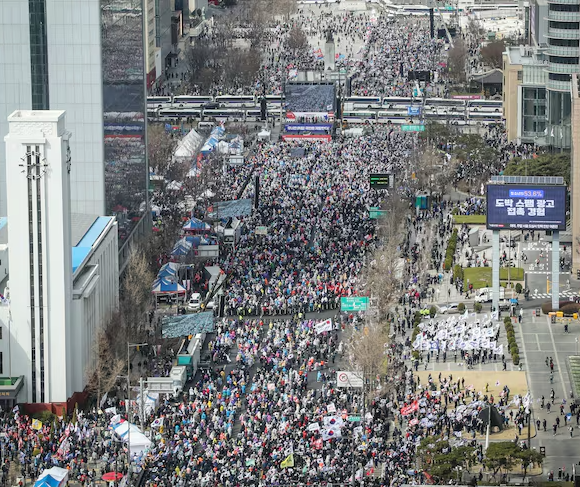
Street protests are a major part of modern Korean political culture.
Korea’s democratization history included large public demonstrations, and protests still play an important role in political expression.
Foreigners may see protests near:
- Gwanghwamun
- Seoul City Hall
- Yeouido
- National Assembly area
- University areas
- Major court or prosecutor office areas
Protests can be about presidents, labor issues, elections, foreign policy, gender issues, corruption, or local conflicts.
In June 2026, Reuters reported protests after ballot paper shortages disrupted some local election voting, with demonstrators calling for a rerun and criticizing election management.
This shows how quickly election administration, public trust, and street politics can become linked in Korea.
11. Why Elections Feel Like National Drama
Korean elections can feel dramatic because they are often treated as judgment days.
A local election may not only be about mayors or governors. It may become a judgment on the president.
A National Assembly election may not only be about lawmakers. It may become a battle over whether the president can govern effectively.
A presidential election may not only be about policy. It may become a fight over justice, corruption, identity, and the future of the country.
| Election Type | What It Chooses | Why It Matters |
|---|---|---|
| Presidential election | President | Decides executive power |
| National Assembly election | Lawmakers | Decides legislative strength |
| Local election | Mayors, governors, local councils | Tests public mood |
| By-election | Replacement officials | Can signal political momentum |
This is why even local election results can dominate national headlines.
12. Korean Words Foreigners Should Know
| Korean | Meaning |
|---|---|
| 여당 | Ruling party |
| 야당 | Opposition party |
| 대통령 | President |
| 국회 | National Assembly |
| 국회의원 | Member of the National Assembly |
| 선거 | Election |
| 지방선거 | Local election |
| 총선 | General election / National Assembly election |
| 대선 | Presidential election |
| 보수 | Conservative |
| 진보 | Progressive |
| 중도 | Moderate / centrist |
| 탄핵 | Impeachment |
| 지지율 | Approval rating |
| 공약 | Campaign pledge |
| 여론조사 | Opinion poll |
| 정권교체 | Change of government |
| 검찰개혁 | Prosecutorial reform |
| 안보 | National security |
| 복지 | Welfare |
The most important two are:
여당 = ruling party
야당 = opposition party
If you understand those two words, Korean news becomes much easier.
13. Common Mistakes Foreigners Make
Foreigners often misunderstand Korean politics in predictable ways.
| Mistake | Why It Is Wrong |
|---|---|
| Thinking Korean politics is only left vs right | History, region, security, and scandals also matter |
| Comparing parties directly to U.S. parties | Korean camps have different roots |
| Ignoring the National Assembly | The president cannot do everything alone |
| Thinking local elections are only local | They often become national judgment votes |
| Confusing party name changes | Rebranding is common |
| Assuming protests mean instability only | Protests are also part of democratic participation |
| Reading only English headlines | Local Korean context may be missing |
| Treating one scandal as the whole system | Politics is more complex than one event |
The biggest mistake is using another country’s political map to explain Korea too quickly.
Korea’s politics must be understood through Korea’s own history.
14. My Honest Verdict: How Should Foreigners Understand Korean Politics?
The easiest way to understand Korean politics is not to memorize every party name.
Start with the structure.
Korea has a strong president, a powerful National Assembly, a ruling party that supports the government, and opposition parties that challenge it. Elections are emotional because they can quickly change the balance of power.
Then understand the background.
Korean politics is shaped by division, rapid democratization, regional identity, economic pressure, housing stress, corruption debates, North Korea, and public protest culture.
So yes, Korean politics can look loud.
But it is not random noise.
It is the sound of a young democracy still arguing intensely over power, justice, security, memory, and the future.
FAQ
What is the ruling party in Korea?
The ruling party is the party connected to the current president or government. As of June 2026, President Lee Jae Myung’s Democratic Party is the ruling party.
What is the main opposition party in Korea?
As of June 2026, the conservative People Power Party is the main opposition party. It retained the Seoul mayor position in the 2026 local elections, even while the ruling Democratic Party won most major races nationally.
What does 여당 mean?
여당 means ruling party.
What does 야당 mean?
야당 means opposition party.
Is Korea a presidential system?
Yes. Korea has a presidential system, and the president leads the executive branch through the Cabinet.
Why do Korean political parties fight so much?
They fight over policy, power, history, corruption, national security, North Korea, economic issues, and public trust. Elections can quickly change political control, so the stakes are high.
Why does Seoul matter in Korean elections?
Seoul is Korea’s capital and a major political, economic, and media center. Winning Seoul can carry strong symbolic meaning, even when other regions vote differently.